Beat The Heat: Warmwater Fly Fishing For Bass, Pike, and More
Warmwater Fly Fishing: The Ultimate Mid-Summer Pivot
When the dog days of August hit Western Montana, the sun bakes the river canyons, ambient temperatures routinely push into the 90s and water temps climb. While trout are cold-water creatures that tend to get a little sluggish in the afternoon heat (and sometimes require hoot owl regulations), dedicated anglers pivot their attention from their local trout streams to warmwater fisheries.
If you're looking for an excuse to shake up your routine, the dog days of summer is the absolute best time to pivot to warmwater fly fishing. Trading in your delicate trout tippets for an 8-weight (or bigger) is the ultimate mid-summer palette cleanser. Bass, pike, and carp don't just tolerate the high sun and warm water, they thrive in it.

Why You Should Try Fly Fishing For Warmwater Species
If you've spent the summer matching the hatch or trying to find the elusive, big brown trout that won't eat the standard fare, warmwater fishing is a breath of fresh air. It’s high-energy, unpretentious, and flat-out fun.
Why try warmwater fly fishing? Because it's fun, challenging, and different than what most anglers imagine fly fishing looks like! The sheer variety alone is enough to hook you: one afternoon you’re stealthily stalking a golden carp tailing in two feet of water like a freshwater bonefish, and the next you’re chugging a giant foam popper across a rocky ledge until a four-pound smallmouth obliterates it with a topwater eat that sounds like a cinder block falling into the river. Simply put, it turns the hottest, sunniest days of summer (when trout fishing can slow to a crawl) into some of the most exciting, action-packed angling of the year.

The Warmwater Lineup: Bass, Pike, and Carp
While Western Montana is famous for blue-ribbon trout, our warm lakes, sloughs, reservoirs, and lower river stretches host world-class warmwater action. Here is how to target our warmwater species and the exact gear you need for each.

Smallmouth & Largemouth Bass
Bass are built for the hottest days of the year. Smallmouth group up along rocky ledges, drop-offs, and boulder fields, while largemouth tuck right into lily pads and weedlines. They are aggressive, opportunistic, and willing to smash flies all day long.
Bass Rod and Line Setup: A fast-action 6-weight or 7-weight rod like a Winston Air 2 Max paired with a weight-forward floating line designed to punch heavy, wind-resistant flies through an afternoon breeze.
Bass Leader and Tippet: Keep it simple by running a 7.5-foot leader tapered down to 10lb or 12lb monofilament. Don't be afraid to experiment with sinking and floating fly lines until you find what works.
Bass Flies: Throw hard-pushing topwater poppers or foam bugs around structure in the morning and evening. During the high-sun afternoon, switch to heavy crayfish imitations or baitfish streamers worked through deeper drop-offs. While most streamers in your trout box will work, we prefer heavier flies with enticing action like a Jawbreaker or Rio's Sir Sticks A Lot.
Best Place to Target Bass Near Missoula: Smallmouth live in much of the lower Clark Fork River and Flathead River. Think around the confluence with the two rivers or below although they can be found spread around the system.

Northern Pike
If you want raw aggression, northern pike are your target. These toothy predators lie in ambush near shallow weed beds, back bays, and in sloughs, ready to launch themselves at anything moving through their territory.
Pike Rod and Line Setup: Break out the heavy artillery. You’ll want an 8-10 weight rod paired with an aggressive-taper floating or sink-tip line to throw heavy, water-logged meat flies without blowing out your shoulder.
Pike Leader and Tippet: Pike have razor-sharp teeth that will chop standard tippet in a heartbeat. Run a short 6-foot heavy leader tied to a 30lb wire tippet or a heavy fluorocarbon bite guard.
Pike Flies: Big, flashy, articulated streamers like a Bunker Bait or an EP H&H in chartreuse, white, yellow, and red. Think 5-to-8-inch patterns that push water and dart rhythmically on the strip.
Best Place to Target Pike Near Missoula: Pike can be found in the Clark Fork River and the Bitterroot River in the lower stretch. While Pike are prevalent across western Montana, numerous lakes around Seeley Lake and the Flathead valley also have them.

Carp
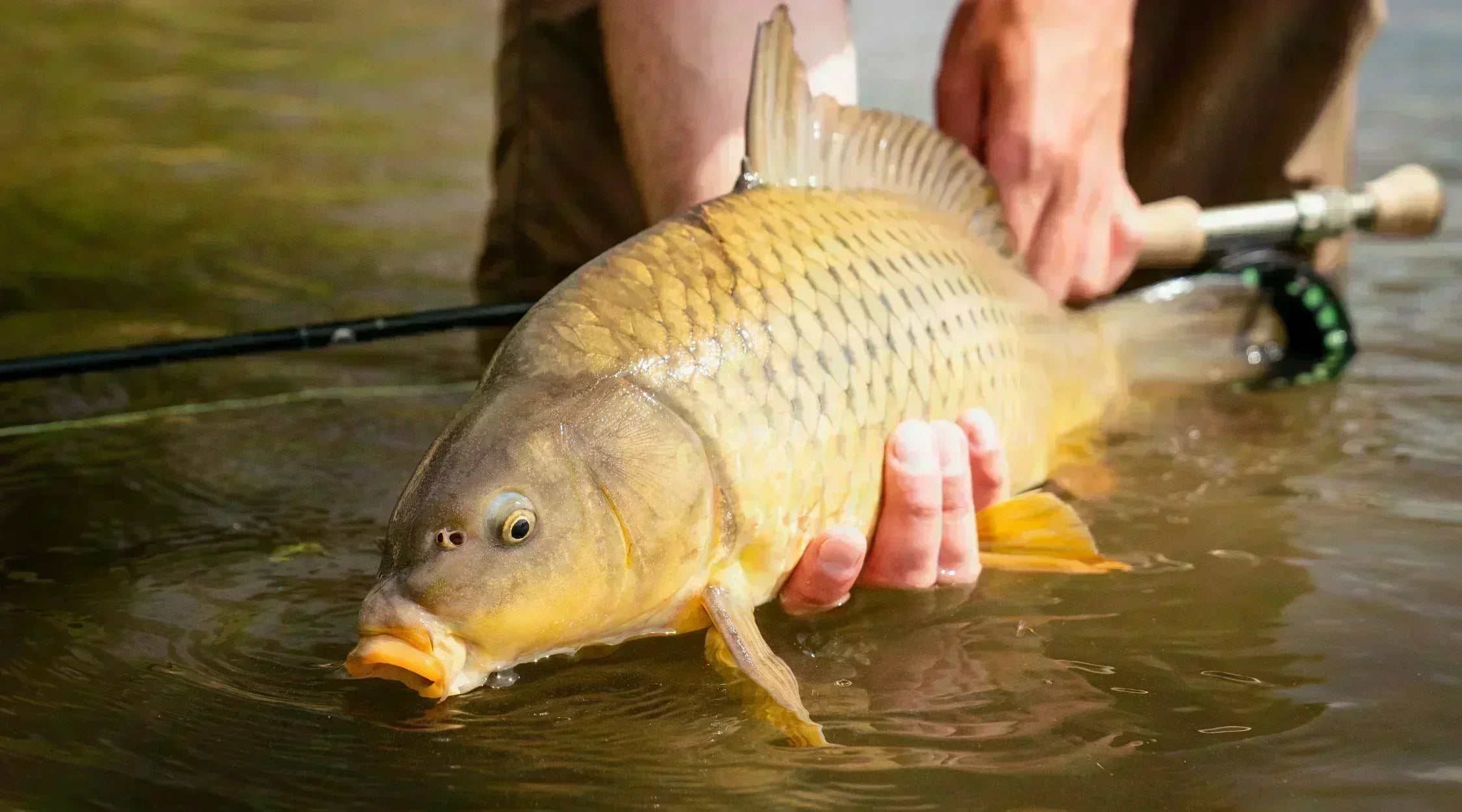
Don't let anyone convince you carp are trash fish. Chasing carp on a fly is widely considered one of the most technical, heart-pounding games in freshwater angling. Known as the "Freshwater Bonefish," they are spooky, possess incredible vision, and fight like runaway freight trains.
Carp Rod and Line Setup: A stout 6-8 weight rod with a smooth floating line that presents flies quietly without splashing.
Carp Leader and Tippet: Carp feed along the bottom and are easily spooked by heavy tackle. Run a 9-foot leader tapered saltwater leader down to 1-3X fluorocarbon tippet to keep your presentation invisible in clear water. Much of this depends on the clarity of water—go heavier when the water is dirty and lighter in clear water.
Carp Flies: Weighted, eyes-down patterns like McTage's Trouser Worm, Egan's Headstand, Carp Bitters, John Bartlett's Hybrid, small crayfish imitations, and buggy rubber-legged nymphs tied on heavy-wire hooks. When it comes down to it, your fly choice depends on depth, forage, and fish behavior—if the water is shallow, try a lighter fly vs. heavier in deeper water. This extensive carp fly list is a good starting point for any carp fishery in the country.
Best Place to Target Carp Near Missoula: You'll have to drive to find carp near Missoula, but the Missouri River system has them in quantity. From the Jefferson River to the upper Missouri near Toston, all of the reservoir lakes near Helena, and downstream of Cascade. Carp are prevalent in the lower rivers and lakes east of the continental divide, as well.

Still Need Your All-Day Trout Fix During the Dog Days of Summer?
If you simply can’t get trout out of your system during the peak of summer, you can still have a blast on cold water by adjusting your map and schedule.
Explore High-Elevation Creeks Alpine streams, mountain lakes, and high-country headwaters stay cold and oxygenated all summer long. Western Montana is ripe for creekin' and you'll be surprised at the size of trout you can find in some streams. In general, you might trade size for solitude, but every step you take on a high country stream is well worth the effort to tangle with wild trout in beautiful surroundings.
Fish Cold Tailwaters Tailwater fisheries below deep bottom-release dams maintain consistent, cold water temperatures year-round, keeping trout active even when valley temps spike. Check out popular tailwaters like the Missouri River below Holter Dam or the upper Madison River below Hegben Reservoir.
Set the Early Alarm Get to the river at first light, enjoy the early-morning bite, and be off the water before the mid-day heat takes over or the water exceeds 68 degrees fahrenheit.

Embrace the Summer Fly Fishing Pivot
Fly fishing shouldn't be rigid. Summer in Montana is short, and sitting out a day of fishing just because your favorite trout stream gets too warm in the afternoon means missing out on some of the best angling action of the year. Grab a heavy rod, load a box with poppers, big streamers, or carp bugs, and head out to explore the warmwater opportunities sitting right in our backyard. Watching a bass crush a topwater fly in full daylight might just become your new favorite summer tradition.
Have questions about warmwater fly fishing or want to pick up a few flies? Give our Missoula fly shop a call to get the latest reports, suggested flies and tackle, or even book a guided Montana fly fishing trip for Northern Pike on local waters.

Frequently Asked Questions About Warmwater Fly Fishing
Do I need special fly lines for warmwater fly fishing? While a standard floating trout line will work in a pinch, warmwater-specific or even saltwater fly lines make casting much easier when the water exceeds 75+ degrees. Warmwater lines feature alternative core materials and aggressive, front-heavy tapers designed to turn over large, wind-resistant poppers and heavy streamers with minimal effort.
Can I use my standard 5-weight trout rod for warmwater species? You can use a 5-weight for smaller bass, but it will struggle to cast wind-resistant flies or tame larger warmwater fish. Casting giant pike streamers on a light rod is nearly impossible while trying to turn an average sized carp will be a big ask from light tackle. We recommend a 6-8 weight rod for both bass and carp while anglers should use a 8-10 weight rod for Pike.
Do I really need a wire leader for northern pike? Yes. Northern Pike have mouths packed with sharp, backward-facing teeth that will slice clean through standard monofilament or fluorocarbon tippet like a razor blade. Running a 12-to-18-inch section of 20 to 30lb bite-wire or heavy fluorocarbon bite guard is mandatory to avoid losing flies.
Is fly fishing for carp actually hard? It is genuinely one of the toughest challenges in freshwater fly fishing. Carp have a strong sense of awareness, great vision, and will spook instantly if a fly lands too heavily near them. Success requires stealthy stalking, leading the fish accurately (check out the drag and drop method!), and waiting for the exact moment they tip up to eat off the bottom.
What time of day is best for warmwater fly fishing? Unlike trout, which can get sluggish during the hottest hours of a summer day, warmwater species remain active right through the mid-day heat. Morning and late evening offer prime topwater popper action for bass, while mid-day is best for visibility when carp fly fishing.


SHOP
WITH US
| Shop Online
Fish
WITH US
| Guided Fly Fishing Trips
stay
WITH US
| Lodging Packages
OUR NEWSLETTER
Sign Up For Our Newsletter & Receive 10% OFF Your Next Order
Join our mailing list for expert information on fly fishing, deals and discounts, and more information from our Missoula fly shop!