Montana Fly Fishing Hatch Chart
A Seasonal Guide to Western Montana's Fly Fishing Hatches
Western Montana’s rivers follow a somewhat predictable but incredibly rewarding seasonal rhythm. While every year varies slightly based on snowpack, runoff, and weather, anglers can count on a progression of bugs that shapes how, when, and where we fish. From winter midges to fall caddis, here’s what to expect from Montana's fly fishing bug hatches.
| Insect Hatch | JAN | FEB | MAR | APR | MAY | JUN | JUL | AUG | SEP | OCT | NOV | DEC |
|---|---|---|---|---|---|---|---|---|---|---|---|---|
| Midges | ● | ● | ● | ● | ● | ● | ● | ● | ● | |||
| Blue Wing Olives | ● | ● | ● | ● | ● | ● | ||||||
| Capnia Stoneflies | ● | ● | ||||||||||
| Nemoura Stoneflies | ● | ● | ||||||||||
| Skwala Stoneflies | ● | ● | ● | |||||||||
| Western March Brown | ● | ● | ||||||||||
| Mother's Day Caddis | ● | ● | ||||||||||
| Salmonflies | ● | ● | ● | |||||||||
| Green Drakes | ● | ● | ||||||||||
| Golden Stones | ● | ● | ● | |||||||||
| Yellow Sallies | ● | ● | ||||||||||
| PMDs (Pale Morning Dun) | ● | ● | ● | |||||||||
| Pale Evening Dun | ● | ● | ● | |||||||||
| Caddis | ● | ● | ● | ● | ● | ● | ||||||
| Ants & Beetles | ● | ● | ● | ● | ||||||||
| Tricos | ● | ● | ● | |||||||||
| Hoppers & Crickets | ● | ● | ● | |||||||||
| Spruce Moth | ● | ● | ● | |||||||||
| Hecuba | ● | ● | ||||||||||
| Mahogany | ● | ● | ||||||||||
| October Caddis | ● | ● | ● |
Winter (January–February): Midges & Patience
Winter fly fishing hatches in Montana is a game of subtlety. The primary food source during the coldest months is midges, with black midges being especially important. These tiny insects hatch during the warmest parts of the day and provide consistent, if technical, opportunities for anglers willing to fish slow and fine. Expect delicate presentations, light tippet, and selective trout—especially on tailwaters and lower-elevation rivers. While nymphing will be most effective during these months, on the warmer days, dry fly fishing hatches in Montana can be exceptional.
Popular fly patterns include Hi-Vis Parachute Midge, Griffiths Gnat, Christiaen's GT Adult, and a Slick Midge Adult.
Early Spring (March–April): Hatch Season Awakens
As daylight lengthens and water temperatures creep upward, spring kicks off with a mix of midges, Blue Winged Olives, and early stoneflies. Capnia, Nemoura, and Skwala stoneflies signal the first real Montana dry fly fishing hatches of the year, often bringing trout to the surface even before runoff begins. April can be one of the most exciting and underrated months for dry fly anglers when conditions line up.
Popular spring mayfly fly patterns include Brindle Chute, Parachute Adams, Film Critic, or a Half Dun. While popular early stonefly patterns include Water Walkers, Plan B, Trina's Skwala, and Dancing Ricky's.
Late Spring (May): Transition Time
May is a month of contrasts. While runoff may limit access on some freestone rivers, bug life explodes wherever water clarity allows. BWOs, March Browns, Mother’s Day caddis, and the first salmonflies begin to show, offering windows of excellent fishing between rising flows. This is a prime time to be flexible, chasing conditions and capitalizing on short but memorable fly fishing hatches in Montana.
If you're going to be fly fishing in May in Montana, have a few stonefly patterns like an A.J.'s Rolling Stone, Double Stack Chubby Chernobyl, or a Christensen's Salmonfly. While having mayflies in your box may be more useful, have popular adult dry fly patterns like a Hi-Vis Parachute or a Purple Haze and a selection of emergers for selective hatch scenarios like a Last Chance Cripple or a Sparkle Flag.
Early Summer (June): Big Bugs, Big Moments
June is when Montana fly fishing earns its reputation. Salmonflies, golden stones, green drakes, PMDs, Yellow Sallies, and caddis dominate the menu. On many rivers, this is peak dry fly season, with aggressive trout willing to eat large, visible flies. Timing matters—runoff, weather, and elevation all play a role—but when it’s on, it’s hard to beat.
While many of the patterns mentioned above will be useful in June, this is a season to have your bases covered because every day, and sometimes every hour, can be different. Have a broad selection of stonefly patterns like a Chubby Chernobyl, Oswald's Rastaman Stonefly, or Rio's Emma's Stone. Popular caddis patterns include Elk Hair Caddis or Rio's Body Double Caddis. And for the dedicated dry fly angler, have some green drake patterns like a Hi-Vis Extended Body Drake or Trina's Carnage Drake handy.
Midsummer (July–August): Consistency & Terrestrials
As runoff fades and rivers settle into summer flows, insect life becomes more predictable. PMDs, Pale Evening Duns, caddis, and Tricos provide dependable Montana hatch fishing, especially mornings and evenings. By mid to late summer, terrestrials—hoppers, ants, and beetles take center stage, offering some of the most enjoyable and visual dry fly fishing of the year.
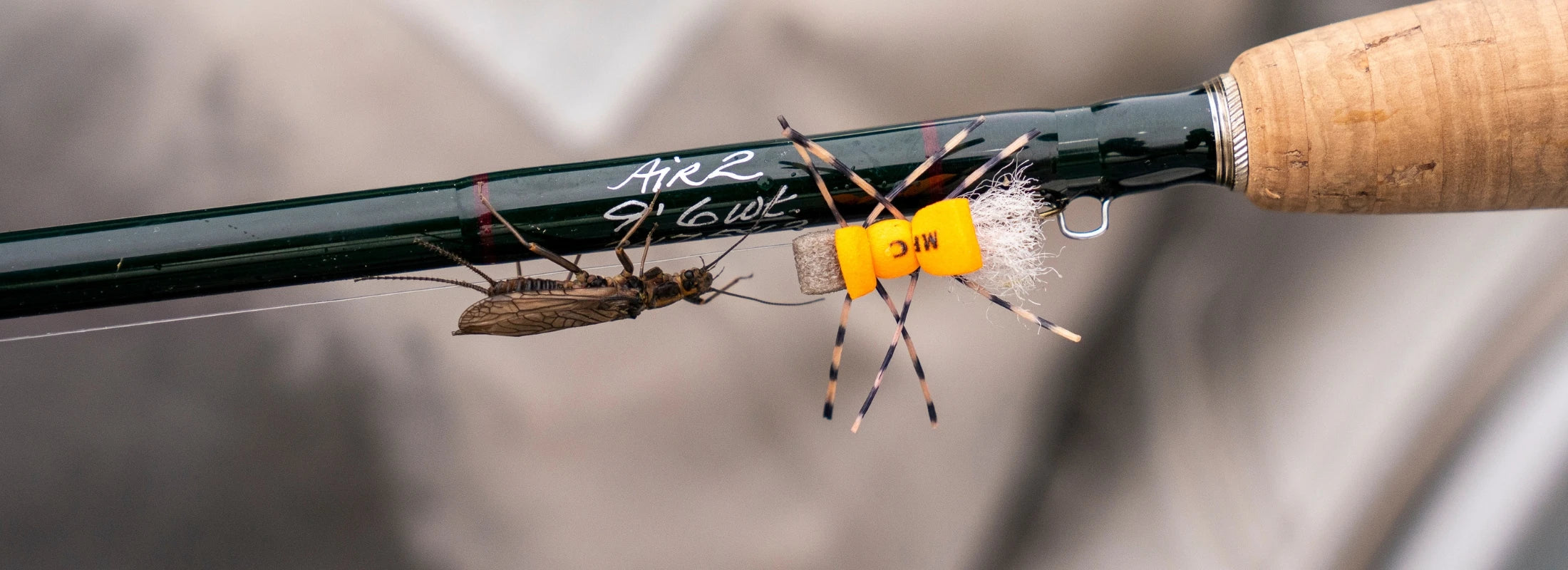
As summer progresses, terrestrial patterns like MFC's KK Henneberry Hopper and Fat Alberts see a lot of time on the water while having some small trico patterns like a Guide Winna Spinna, King Splitsville Spinner, or a Two-Wing Spinner can prove useful.
Early Fall (September): A Second Wind
September brings cooler nights, fewer anglers, and a renewed focus on surface feeding. Tricos, caddis, terrestrials, spruce moths, and early fall mayflies keep trout looking up. Dry fly fishing remains excellent, often paired with ideal water conditions and aggressive fish preparing for winter.
All of the flies mentioned above will be useful in this season but we'll call out the Galloup's Butch Caddis as a suitable spruce moth imitation.
Late Fall (October–November): Last Call
As temperatures drop, hatches thin out but don’t disappear. October caddis, Mahogany duns, BWOs, Hecuba, and late-season midges provide meaningful opportunities for anglers willing to brave crisp mornings. Dry fly fishing becomes more situational, but when bugs pop, trout respond with confidence.
On the cloudy, cool days of fall, make sure you have Godlike Caddis, Split Flag, and other mayfly patterns in various sizes to cover your bases.
Early Winter (December): Back to Midges
By December, the cycle comes full circle. Most insect activity fades, leaving midges as the primary hatch once again. Fishing slows, but dedicated anglers can still find steady action during short winter windows—especially on rivers with stable flows.
For the dedicated dry fly angler, it's possible to get fish on top year-round if you know where to go and the weather cooperates. The key is to be flexible, follow the flows, the hatches, and the conditions, and you will find success.
Have questions about which flies to use or where to go? Give our Missoula fly shop a call, our staff are experts in the local Missoula fly fishing area and beyond.


SHOP
WITH US
| Shop Online
Fish
WITH US
| Guided Fly Fishing Trips
stay
WITH US
| Lodging Packages
OUR NEWSLETTER
Sign Up For Our Newsletter & Receive 10% OFF Your Next Order
Join our mailing list for expert information on fly fishing, deals and discounts, and more information from our Missoula fly shop!